Walk out your front door in Edgemere Park on a First Friday evening and you'll likely end up somewhere else within ten minutes. Head toward NW 30th and Walker and the porches give way to gallery windows, string lights, and the smell of something frying at a burger counter with a punk rock playlist. Turn around and walk back into the neighborhood itself and you'll find the opposite: quiet streets curving toward a park, a creek, a scatter of Tudor rooflines, and not a single storefront in sight.
That contrast isn't an accident of how the neighborhood grew. It's the plan working exactly as designed, a hundred years later.
What Actually Turns 100 This Year
Edgemere Park wasn't built all at once. The Edgemere Development Company surveyed and platted the addition in three separate dedications: May 20, 1926, May 20, 1927, and November 17, 1927, according to the neighborhood's own history page. The park land at the center of it all wasn't formally dedicated until November 16, 1927, a year after the first phase of lots went in. So "centennial" here isn't a single birthday. It's a rolling one that started in 2026 and won't fully wrap until 2027.
Edgemere Park Preservation, Inc., the neighborhood's homeowner association, has built its 2026 programming around that anniversary, working it into the group's quarterly newsletter and its regular slate of social events. It's a fitting way to mark the year for an organization whose entire budget runs on modest math: annual dues of $100 per household fund the newsletter, the website, social gatherings, and maintenance of the neighborhood's historic streetlights and public spaces. There's no ribbon-cutting fund line in that budget, because there's never been anything commercial to cut a ribbon on.
The Clause That's Still in Effect
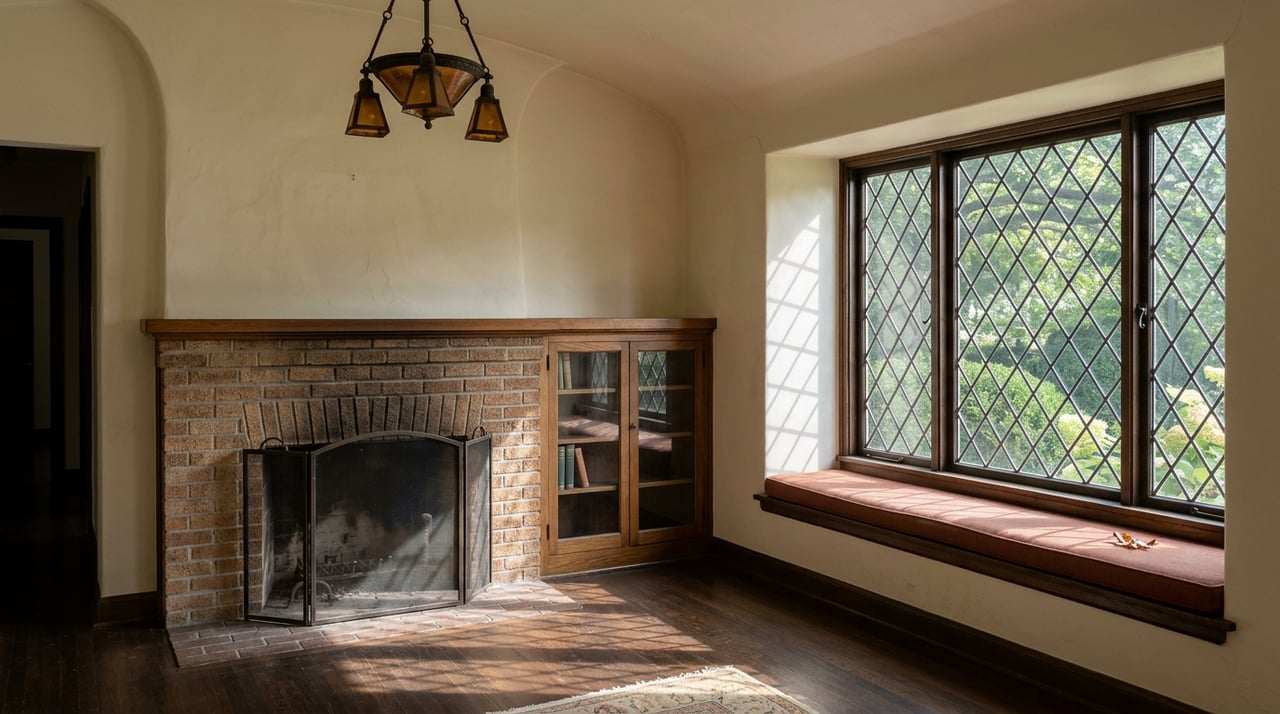
That absence traces back to the original plat restrictions. When the Edgemere Development Company laid out the addition, it required every structure to be built of brick, stone, or stucco, and it left no allowance for commercial buildings anywhere inside the boundary. The district's National Register of Historic Places nomination, filed in 1978 and describing the area for federal listing, states plainly that Edgemere Park is entirely residential with no commercial intrusions. Almost 300 houses sit inside that boundary, and few of them were built after 1940. The neighborhood essentially stopped adding new structures once the original vision filled in, and it's kept that shape ever since.
The modern version of that same restriction is procedural rather than written into a plat map. Any exterior change to a house, garage, driveway, or fence in Edgemere Park now requires a Certificate of Appropriateness from the city's Historic Preservation Commission before work can begin. It's a different mechanism than a 1926 deed restriction, but the intent hasn't moved an inch: keep the interior exactly what it was built to be, and keep commerce out.
So Where Does the Restaurant Scene Actually Come From
None of it comes from inside the plat. Every business a resident might point to when describing the neighborhood's appeal sits just across one of its four boundary streets, in a district with its own name, its own governance, and its own history that has nothing to do with Edgemere Park Preservation, Inc.
South of the boundary, near 30th and Walker, sits the Paseo Arts District, home to Burger Punk, a restaurant built around a punk rock theme with menu items like a burger called the Clash and a veggie option called the Green Daze, and Flora Bodega, which carries fresh produce and baked goods from vendors around Oklahoma. To the east on 36th Street, a Homeland grocery store anchors the retail side of daily errands, its exterior carrying a mural meant to reflect the sense of community in the surrounding blocks. All of it is close. None of it is technically Edgemere Park's own.
That distinction matters more than it sounds like it should. The neighborhood's reputation for walkability to dining and arts is real, but it's a borrowed reputation, built entirely on the fact that a preservation-only district happens to sit next to a commercial one that was allowed to grow the way Edgemere Park was designed never to.
First Friday, Right Now
The clearest evidence of that borrowing shows up on a recurring schedule. The Paseo Arts District hosts a First Friday Gallery Walk on the first Friday of every month, rain or shine, from 6 to 9pm, and the district has three more dates locked in before the year closes out: September 4, October 2, and November 6, 2026. It's a free, dog-friendly event with more than 80 artists and over 25 galleries and businesses participating, all of them staying open late so residents can move from studio to studio on foot.
The event is organized by the Paseo Arts Association, a completely separate organization from Edgemere Park Preservation, Inc. There's no overlap in governance, no shared budget, no joint newsletter. When an Edgemere Park resident walks to First Friday, they're not attending a neighborhood event. They're a guest in someone else's district, which happens to be close enough to reach on foot.
What's Actually Inside the Line
Strip away the borrowed dining and gallery scene and what's left inside Edgemere Park is quieter, but it's not nothing. The central green space, despite giving the neighborhood its name, is officially called Guy James Park, and it sits along a tributary of Deep Fork Creek that runs through the middle of the district. Every street inside the boundary curves toward it, a layout the neighborhood's own materials trace to the influence of city planner Frederick Law Olmsted, who argued that residential design should orient itself around shared green space rather than through traffic.
That orientation shows up in the neighborhood's one recurring civic moment that doesn't require crossing a boundary street. Each spring, the OKC Memorial Marathon route runs directly through Edgemere Park, and residents turn stretches of the course into informal cheering sections, handing out food and drinks to runners as they pass. One popular spot along the route has picked up a nickname among neighbors over the years for the drinks handed out there each morning. It's the kind of tradition that only works because the park-centered layout put front yards and porches within a few steps of the street in the first place. It's also entirely seasonal, tied to a spring race, and won't repeat again until next year's course runs through.
A Centennial for the Blank Space
Put those two halves next to each other and the shape of the anniversary gets easier to see. A hundred years ago, a developer platted a residential addition with a plat restriction that ruled out commerce entirely, oriented every street toward a shared park, and left the social and retail life of the area to whatever grew up along its edges. A century later, that's still exactly the arrangement. The centennial being marked this year by Edgemere Park Preservation, Inc. isn't a birthday for a business district, an event venue, or a Main Street. It's a birthday for a deliberately empty middle, one that's held its shape through a Certificate of Appropriateness process for a hundred years while the Paseo Arts District next door built the restaurant and gallery scene the neighborhood gets credit for.
For anyone who already lives inside that boundary, the practical version of all this is simple. The party is always going to be a few blocks away. The quiet is always going to be the point.
If you're the kind of homeowner who finds that tension between a historic preservation district and its commercial neighbors genuinely interesting, and you want to talk through what it means for a property inside a district like Edgemere Park, Brandon Jackson at OKC Real Estate Group has spent years working transactions across these older Oklahoma City neighborhoods and is glad to walk through the details with you. Schedule a free consultation whenever you're ready.
Connect with Brandon Jackson, OKC Real Estate on Google for reviews, updates, and trusted local real estate guidance.