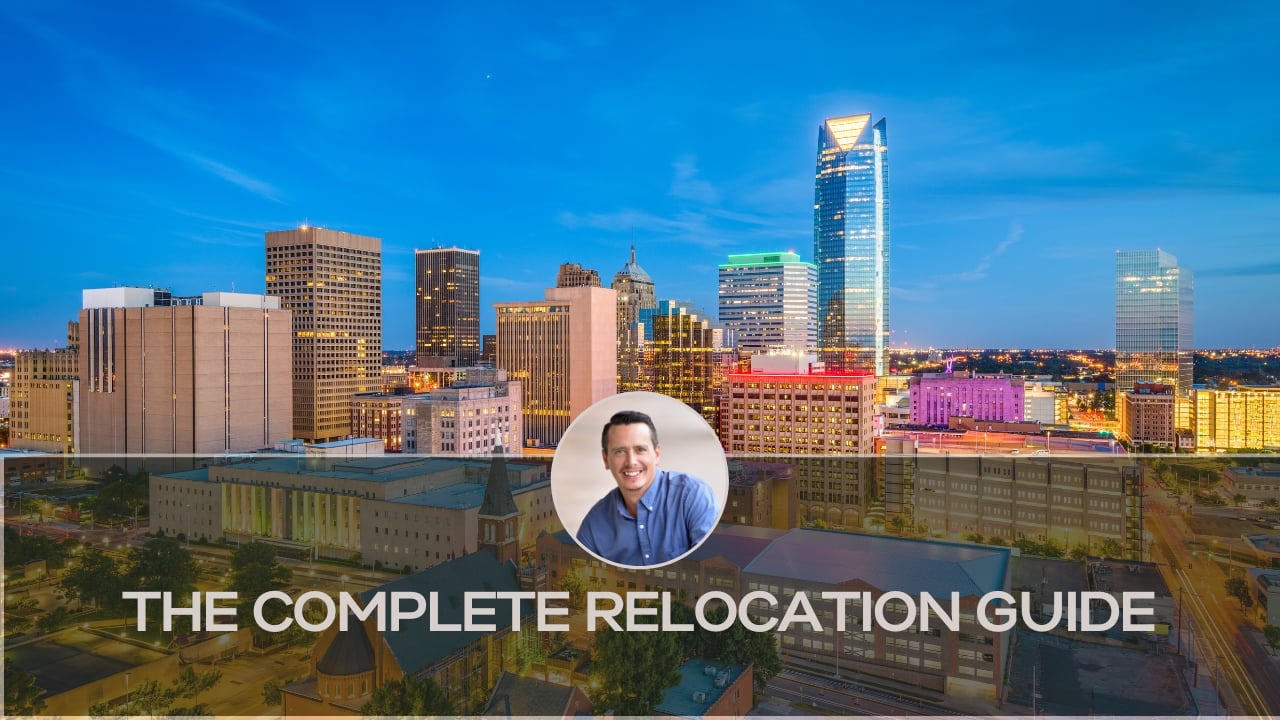
Moving to Central Oklahoma City: A Guide to the Neighborhoods, Lifestyle & Homes
If you’re thinking about moving to Oklahoma City and want character, architecture, mature trees, local restaurants, and easy access to the heart of the city, Central Oklahoma City deserves a serious look.
Central OKC is one of the most distinctive parts of the metro. Instead of large master-planned developments and rows of similar homes, you’ll find neighborhoods that have evolved over generations. Historic homes sit beneath mature tree canopies, locally owned restaurants and coffee shops are minutes away, and some of Oklahoma City’s most popular districts are woven directly into the surrounding residential areas.
You’ll also find a wide range of housing. Depending on the neighborhood, that can mean a carefully preserved early-1900s residence, a Tudor Revival home from the 1920s or 1930s, a renovated bungalow, contemporary infill, a luxury condominium, or something completely unexpected.
That variety is a big part of Central OKC's appeal.
If you're relocating to Oklahoma City, however, choosing where to live here requires looking beyond the house itself. Each neighborhood has its own personality, architecture, location, and relationship with the surrounding city.
Here are some of the Central Oklahoma City neighborhoods worth knowing.
Heritage Hills
If you're researching historic or luxury homes in Oklahoma City, Heritage Hills is likely to come up quickly.
Established in the early 1900s, Heritage Hills combines significant historic architecture with an incredibly central location. The neighborhood sits just north of downtown and is only minutes from Midtown, Uptown 23rd and many of the restaurants, businesses and entertainment options that have helped reshape Oklahoma City's urban core.
Heritage Hills was created by joining three of Oklahoma City's earliest residential areas and became Oklahoma's first Historic Preservation District. Today, it remains one of the city's most recognizable historic residential neighborhoods.
This is a neighborhood to consider if you're looking for a home with architectural presence, history and character while still wanting convenient access to downtown OKC.
Mesta Park
Directly adjacent to Heritage Hills, Mesta Park offers another opportunity to live in one of Oklahoma City's established historic neighborhoods.
Originally platted as University Addition in 1902, much of Mesta Park developed between 1906 and 1930. Its architecture includes Prairie, Foursquare, Craftsman and other early-20th-century styles. The neighborhood is both listed on the National Register of Historic Places and designated as a Historic Preservation District by Oklahoma City.
One of the things I like about Mesta Park is its balance. You're living in a genuinely historic neighborhood, but you're also close to the restaurants and activity along Uptown 23rd, Midtown and the surrounding urban core.
For someone relocating from a larger city who wants a more established, urban neighborhood rather than a traditional suburban development, Mesta Park is worth exploring.
Crown Heights
Travel a little farther north and you'll find Crown Heights, another of Central Oklahoma City's signature historic neighborhoods.
Development began in the early 1930s on land that had previously been home to the Oklahoma City Golf & Country Club. Today, the neighborhood is known for its tree-lined streets and collection of architectural styles that include Tudor, French Eclectic and Mission influences.
Crown Heights can be a strong option for buyers who appreciate historic architecture but still want relatively convenient access to downtown, major employment centers and the broader OKC metro.
Edgemere Park
Edgemere Park is centered around the neighborhood park that gives the community its name.
Most of the neighborhood's residences were constructed during the 1920s and 1930s, with Tudor Revival architecture particularly well represented alongside Colonial Revival, Spanish Eclectic and Art Moderne homes.
The layout also helps give Edgemere Park its personality. Interior streets lead toward the central park, creating a neighborhood that feels intentionally connected to its green space.
For buyers who want historic architecture and a neighborhood park to be part of their everyday surroundings, Edgemere Park should be on the list.
Putnam Heights
Putnam Heights is another neighborhood where Oklahoma City's early history is visible in the homes themselves.
The historic preservation area includes just over 100 homes and features architecture ranging from Tudor and English Colonial to Spanish Mission and Prairie styles. Its history is also tied to some of Oklahoma's early political, legal and architectural figures.
If you want a neighborhood that feels established and architecturally distinctive, Putnam Heights offers something that is difficult to duplicate with newer construction.
Linwood Place
Linwood Place offers another flavor of historic Central OKC living.
Here you'll find established homes, mature landscaping and convenient access to several major corridors connecting residents with downtown and northwest Oklahoma City.
For buyers comparing Central OKC neighborhoods, Linwood Place is worth considering because it can provide the character people are looking for in an older neighborhood while feeling a little removed from the activity immediately surrounding downtown.
Gatewood
Gatewood sits near one of Oklahoma City's most recognizable urban districts, the Plaza District.
The location is a major part of its appeal. Restaurants, galleries, shops, entertainment and neighborhood events are nearby, while the surrounding residential streets offer an eclectic mix of older homes, renovations and infill.
If your ideal Saturday involves grabbing coffee, walking to lunch, checking out a local shop and being downtown a few minutes later, this part of Central OKC may fit the lifestyle you're after.
Paseo
The Paseo area is one of the easiest parts of Oklahoma City to recognize.
Known for its arts district and distinctive architecture, Paseo combines residential streets with galleries, restaurants, shops and creative spaces. The City of Oklahoma City recognizes Paseo as both an area with historic preservation protections and as part of its urban design framework.
For someone who wants to feel connected to Oklahoma City's arts and local-business community, Paseo offers a lifestyle that's very different from what you'll find in most suburban parts of the metro.
Military Park
Military Park is another historic Central Oklahoma City neighborhood with deep ties to the city's development.
The area dates back to the early 1900s and was developed by Israel M. Putnam. Its location also connects it closely with what became Oklahoma City's Asian District. Military Park itself later became an important gathering place for Oklahoma City's Vietnamese community and today includes a memorial honoring American and South Vietnamese veterans.
The neighborhood's location provides convenient access to the Asian District, Uptown 23rd and other parts of Central OKC.
Living Near the Plaza District, Uptown 23rd, Midtown and the Asian District
One thing that's important to understand when you're relocating to Oklahoma City is that choosing Central OKC isn't only about choosing a neighborhood.
You're also choosing which parts of the city's urban lifestyle you want nearby.
The Plaza District is known for locally owned restaurants, shops, art and entertainment. Uptown 23rd has become one of the city's major restaurant and entertainment corridors. Midtown puts you immediately north of downtown with restaurants, nightlife, apartments, condos and urban living. The Asian District brings together some of Oklahoma City's best-known Vietnamese and Asian restaurants, markets and businesses.
The City officially recognizes the Asian District, Paseo, Plaza District and portions of the Uptown NW 23rd corridor as Urban Design Overlay Districts, reflecting the importance of these areas to Oklahoma City's urban environment.
That mix is one of the biggest differences between living in Central OKC and choosing a home farther into the suburbs.
What Should You Know Before Buying a Historic Home in Central OKC?
This is an important one.
A historic home can be incredible, but buying one requires a different mindset than buying a newer home.
Older homes can come with original windows, masonry, electrical systems, plumbing, foundations and other components that deserve careful evaluation during your inspection period. Renovations may also have been completed across several different decades.
And if you're buying within one of Oklahoma City's designated Historic Preservation districts, don't assume you can make every exterior change you want after closing.
Oklahoma City has specific review requirements for changes to properties within Historic Preservation and Historic Landmark areas. Certain renovations, additions, demolition and new construction can require approval through the City's historic preservation process.
You can review the City's Historic Preservation information here.
That's something I want my buyers to understand before they purchase the property, not after they've already started planning a renovation.
Is Central Oklahoma City Right for You?
Central OKC isn't automatically the right choice for everyone relocating to Oklahoma City.
And that's okay.
If your priorities are a brand-new home, larger lots, newer neighborhood amenities or being closer to employment on the outer edges of the metro, we may look at communities like Edmond, Yukon, Mustang, Piedmont, Moore or other parts of the Oklahoma City metro.
But if you're looking for historic architecture, established neighborhoods, mature trees, local restaurants and easier access to downtown Oklahoma City, Central OKC deserves a close look.
The key is figuring out which neighborhood actually matches how you want to live.
Moving to Central Oklahoma City?
If you're relocating to Oklahoma City, especially if you're trying to make decisions from another state or while preparing for a military PCS, you don't have to figure out the metro from a map.
That's a big part of what I help buyers do.
We can narrow the search based on your commute, lifestyle, housing preferences, budget and the parts of Oklahoma City where you'll actually spend your time. From there, we can compare neighborhoods and homes that make sense for you.
Explore more communities in my Oklahoma City real estate and neighborhood guides or reach out and let's build a plan for your move.
Serving with strategy. Negotiating with purpose.
Frequently Asked Questions About Moving to Central Oklahoma City
What are some of the best-known neighborhoods in Central Oklahoma City?
Heritage Hills, Mesta Park, Crown Heights, Edgemere Park, Putnam Heights, Linwood Place, Gatewood, Paseo and Military Park are among the established neighborhoods buyers often consider when exploring Central OKC. The right choice depends on your budget, preferred architecture, commute and lifestyle.
Does Central Oklahoma City have historic homes?
Yes. Central OKC contains several officially designated Historic Preservation districts, including Crown Heights, Edgemere Park, Mesta Park, Heritage Hills, Paseo and Putnam Heights.
Can I renovate a historic home in Oklahoma City?
Yes, but properties located within certain Historic Preservation or Historic Landmark areas may be subject to additional review. Exterior modifications, additions, demolition and new construction can require approval from Oklahoma City's Planning Department or Historic Preservation Commission.
Is Central OKC close to downtown Oklahoma City?
Yes. Many Central OKC neighborhoods offer convenient access to downtown as well as Midtown, Uptown 23rd, the Plaza District, Paseo and the Asian District.
Is Central Oklahoma City a good option for someone relocating to OKC?
It can be an excellent option for buyers who prioritize historic architecture, established neighborhoods, local restaurants and proximity to Oklahoma City's urban core. Buyers looking primarily for new construction, larger lots or suburban-style amenities may want to compare Central OKC with other parts of the metro.
Connect with Brandon Jackson, OKC Real Estate on Google for reviews, updates, and trusted local real estate guidance.